
High-value sealed-system work
Sub-Zero sealed system & compressor repair in the Los Gatos foothills
The hardest Sub-Zero faults, done right — refrigerant, dual-refrigeration and compressor diagnosis backed by pressure and electrical evidence, never guesswork.
- $89 service call, waived when you book the repair
- 365-day warranty on all labor
- Genuine OEM Sub-Zero parts
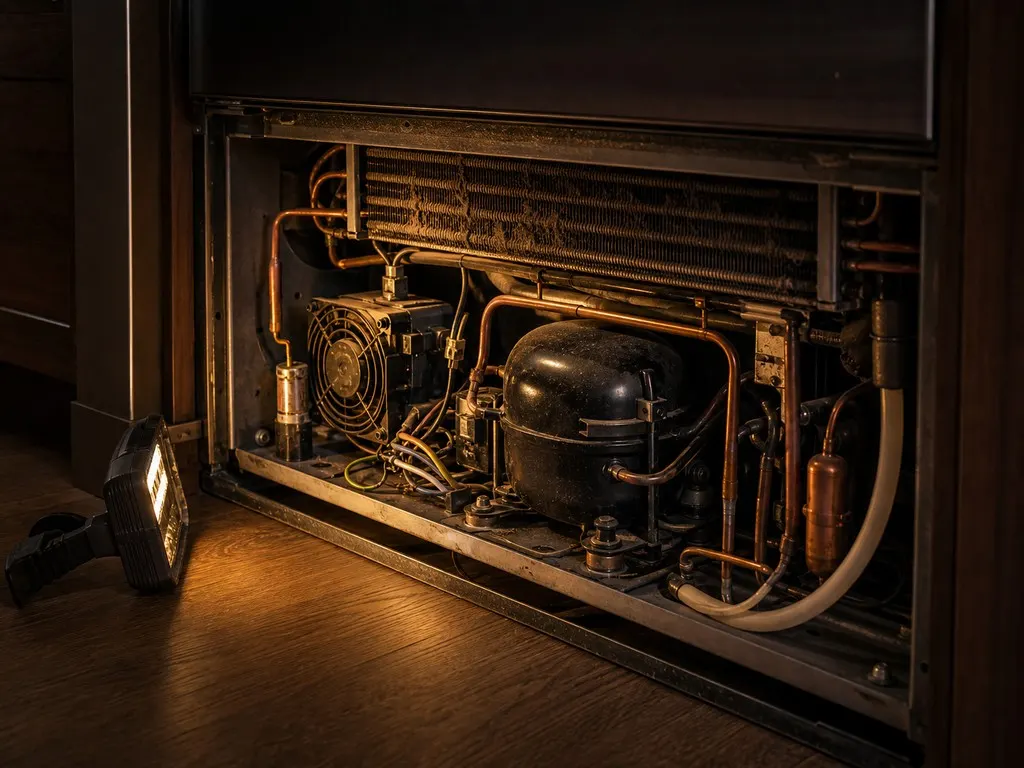
The sealed system is the refrigerant circuit that actually makes a Sub-Zero cold: compressor, condenser, evaporator and the charge that moves heat between them. We diagnose these faults with pressure readings and electrical proof before quoting a single part, because a wrong sealed-system call is the most expensive mistake in the kitchen. Our $89 diagnostic is waived when you book the repair, we fit factory-certified, genuine OEM Sub-Zero parts, and every repair carries a 365-day warranty on all labor.
What the sealed system is
The refrigerant circuit behind every cold Sub-Zero
Most "not cold" complaints are not sealed-system failures at all — which is exactly why this work must be proven, not guessed.
A Sub-Zero stays cold because a fixed charge of refrigerant cycles through four parts in sequence. The compressor raises the refrigerant to high pressure; the condenser sheds that heat to the room; a metering device drops the pressure; and the evaporator coil absorbs heat from inside the cabinet, leaving the box cold. When the charge, the compressor or any coil is compromised, the whole circuit underperforms — and it usually does so quietly, for weeks, before food temperatures finally slip.
Built-in and integrated Sub-Zero models use dual refrigeration: two completely separate sealed systems, one for the refrigerator and one for the freezer, so odors and humidity never cross over. That design is a gift to food and a trap for the careless — a freezer-side leak can read as "the fridge is fine" while the freezer slowly warms, and a refrigerator-side compressor fault leaves the freezer rock-solid. Diagnosing the wrong circuit means opening the wrong tubing.
Because a sealed system is brazed closed, you cannot simply "look" at the charge. We read it. Pressures, superheat, compressor current draw and coil temperatures tell us whether refrigerant is low, the compressor has lost pump efficiency, or the fault is somewhere else entirely — a failed evaporator fan, a frosted coil or a control board mimicking a refrigerant problem. If the symptom is broad "not cooling," we start there and only escalate to sealed-system work when the evidence demands it.
Sealed-system symptoms, likely cause and the right next move
These are the patterns that point toward refrigerant or compressor trouble — and the patterns that do not.
| Symptom | Likely cause | What we do |
|---|---|---|
| Both compartments warm, compressor still runs | Low or lost refrigerant charge from a leak, or a compressor no longer pumping efficiently | Connect gauges, read suction/discharge pressures and compressor current; trace the leak before any charge is touched |
| Compressor hot, noisy or clicking on and off | Failing start components, seized or overheating compressor, or a struggling sealed system tripping the overload | Measure start/run electrical values and amperage; confirm whether the compressor or its start gear is the real fault |
| Freezer not freezing while the fridge seems okay | Freezer-side dual-refrigeration fault — partial charge loss or a weak compressor on that circuit only | Test the freezer sealed system independently; verify against the separate freezer circuit |
| Frost on only part of the evaporator coil | Insufficient refrigerant feeding the coil, or a partial restriction in the metering device | Map the frost line and pressures to separate a low charge from a restriction — two different repairs |
| Very long run times and rising energy use | Dirty condenser, weakening compressor, or a slow leak forcing the system to work harder for less cooling | Inspect and clean the condenser first, then quantify compressor performance under load before condemning the sealed system |
How it works
How we confirm a sealed-system or compressor fault before quoting
No sealed-system work is approved on a hunch. Each step has to produce evidence before we move to the next.
- 1
Rule out the cheap causes first
Before refrigerant ever enters the conversation, we verify door seals, condenser cleanliness, evaporator and condenser fans, defrost performance and the control board. Many "compressor" calls end here at a fraction of the cost.
- 2
Read the electrical proof
We measure compressor start and run values, current draw and the behavior of the start components. A compressor that will not start, or draws abnormal amperage, tells us whether the motor itself is the fault — using factory-grade tools and factory-spec diagnostics.
- 3
Take pressure readings on the right circuit
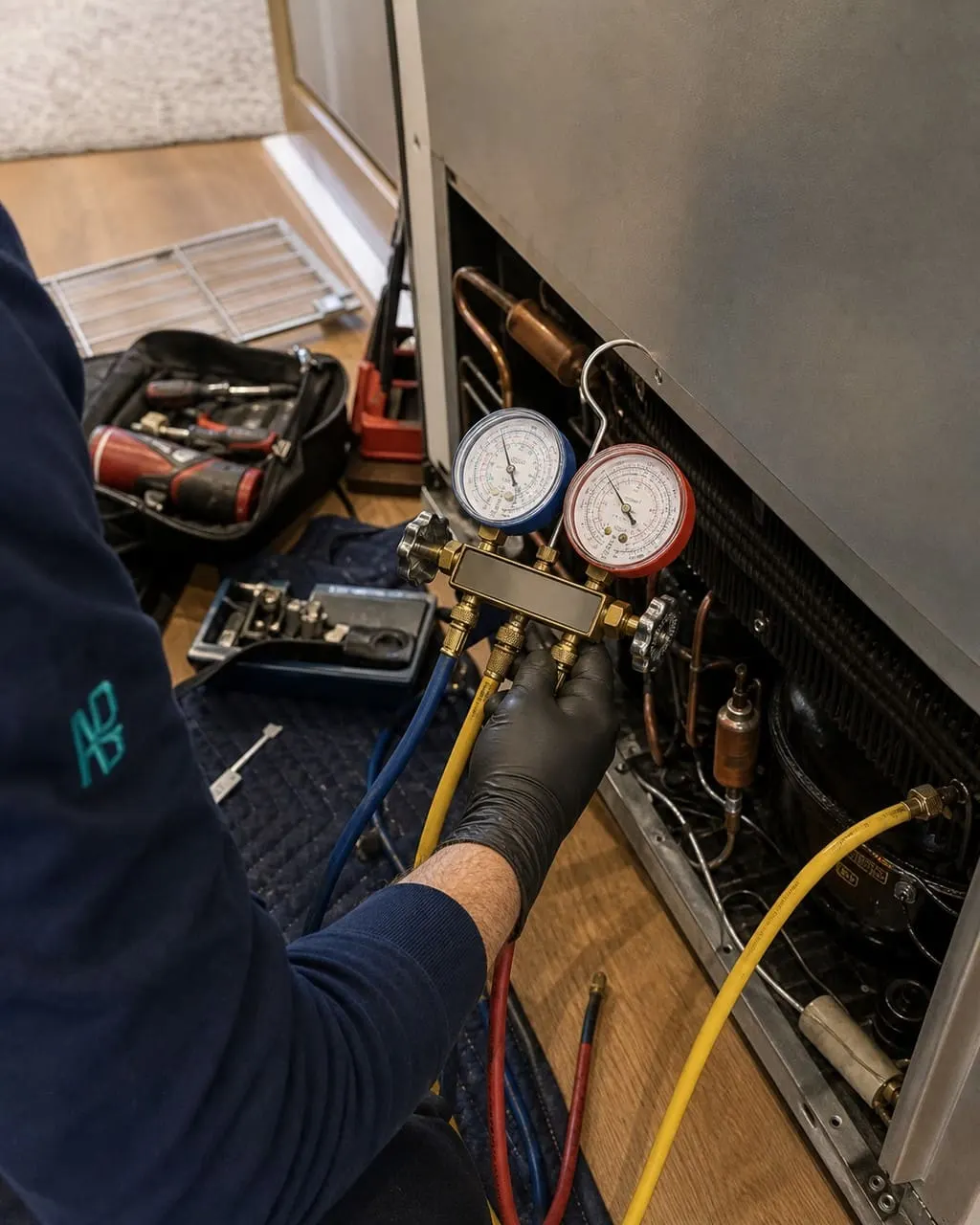
Gauges go on the correct dual-refrigeration system. Suction and discharge pressures, compared against the model's specification, distinguish a low charge, a restriction and a worn compressor from one another.
- 4
Confirm with temperatures and superheat
Coil and cabinet temperatures, plus superheat, cross-check the pressure picture. We look for the frost line, the temperature split and run-time behavior to confirm the story the gauges are telling.
- 5
Quote only the proven repair
Once the evidence converges on one fault, you get a written, fixed quote following manufacturer-recommended procedures — leak repair and recharge, a metering-device correction, or compressor replacement, never a guess and never a parts-swap fishing trip.
Before you approve sealed-system work, do not
Sealed-system repairs are the costliest in the kitchen. Protect yourself by insisting on these.
- Do not approve a compressor or "needs refrigerant" quote that has no pressure readings and no compressor amperage behind it.
- Do not let anyone add refrigerant without first finding and repairing the leak — a recharge over an open leak fails again within weeks.
- Do not keep running a Sub-Zero that is warm with a hot, clicking compressor; repeated overload cycling can turn a recoverable fault into a full compressor replacement.
- Do not accept a sealed-system diagnosis for the wrong circuit — confirm the dual-refrigeration side that actually failed before any tubing is opened.
- Do not pay for a generic compressor when the correct repair uses factory-certified, genuine OEM Sub-Zero parts matched to your model.
Transparent pricing
What Sub-Zero repairs typically cost
Indicative ranges for planning. Sealed-system and compressor work sits at the high end and depends heavily on the parts your model needs.
| Service in Los Gatos | Draft range | Time | Note |
|---|---|---|---|
| Diagnostic / service call | $89 | 45–90 min | Model, temps, airflow, visual checks |
| Door gasket / frost-line | $400–$900 | 1–3 h | Model & gasket availability |
| Wine column temp / dual-zone | $350–$1,200 | 1–4 h | Sensor, fan, control after diagnosis |
| Ice maker / water line | $275–$850 | 1–3 h | Valve / fill tube / module |
| Control board / sensor | $350–$1,250 | 1–4 h | Quote after electrical proof |
| Compressor / sealed system | $1,450–$3,600 | 2–6 h + parts | Requires pressure / electrical evidence |
A written quote backed by proof — then the warranty to match
You receive a written, fixed-price quote only after the fault is confirmed by pressure and electrical evidence. We install factory-certified, genuine OEM Sub-Zero parts, follow Sub-Zero service specifications, and stand behind the work with a 365-day warranty on all labor. As an independent Sub-Zero repair specialist serving the Los Gatos foothills, we plan hillside access and long-driveway estates in advance so the visit runs cleanly the first time.
Foothill clients on the hardest repairs
Sealed-system and not-cooling jobs where the diagnosis had to be right the first time.
A loud buzzing whir started up and you could hear it across our open kitchen. They isolated it to a failing evaporator-fan bearing, replaced the motor with a genuine OEM part, and the unit is whisper-quiet again. Methodical from the first listen — exactly the Sub-Zero expertise I wanted in the foothills.
Our built-in Sub-Zero stopped holding temperature the week before a dinner party. The technician diagnosed a fan and sensor fault, had the genuine parts on the van, and the $89 service call was waived once we approved the repair. Calm, tidy, and clearly knew these units.
Both the fridge and freezer sides were warm. Instead of guessing, the tech ran sealed-system checks and showed me the readings before quoting. Honest, methodical, and the repair has held perfectly. Exactly the Sub-Zero specialist I was hoping to find in the foothills.
Answers
Sealed-system and compressor questions
How do you know it is the sealed system and not something cheaper?
We prove it. Before refrigerant or a compressor is ever quoted, we verify door seals, condenser cleanliness, fans, defrost and the control board, then take compressor amperage and manifold pressure readings on the correct dual-refrigeration circuit. Only when that evidence converges on a refrigerant leak, a restriction or a worn compressor do we call it a sealed-system fault — many calls are resolved long before that point.
Why is sealed-system work the most expensive Sub-Zero repair?
The sealed system is a brazed, pressurized circuit, so repairs involve recovering refrigerant, repairing or replacing components, evacuating the system and recharging it precisely to specification. Compressors are also costly OEM parts. That is exactly why we insist on pressure and electrical proof first — the worst outcome is paying for sealed-system work when a fan, board or dirty condenser was the real problem.
Can you just add refrigerant to get it cold again?
No reputable repair adds refrigerant over an unrepaired leak. A Sub-Zero holds a sealed, fixed charge; if it is low, refrigerant escaped somewhere and will escape again. We locate and repair the leak, evacuate the system and recharge to the exact factory specification. A simple "top-up" buys a few weeks and wastes your money — it is not a real fix.
My freezer warmed up but the refrigerator is still fine. Is that the sealed system?
It can be. Built-in Sub-Zero models use dual refrigeration — two independent sealed systems — so the freezer can fail on its own through a partial charge loss or a weak compressor while the refrigerator stays cold. We test the freezer circuit independently to confirm whether the fault is sealed-system or a fan, defrost or control issue specific to the freezer side.
Is it safe to keep running the unit until you arrive?
If the compressor is hot, clicking and cycling on and off, switch the unit off and call us. Repeated overload tripping can take a recoverable compressor fault and turn it into a full replacement. If the cabinet is simply warm but quiet, move perishables to another fridge and we will diagnose it promptly. When in doubt, call (650) 668-1554 and we will advise.
Do you use genuine Sub-Zero compressors and parts?
Yes. We install factory-certified, genuine OEM Sub-Zero parts matched to your exact model and serial. A generic compressor or aftermarket component can mismatch the sealed system's design and shorten its life. Using the correct OEM parts and following Sub-Zero service specifications is also why we can back the repair with a 365-day warranty on all labor.
What does the diagnostic cost, and is it credited?
The diagnostic is $89, and it is waived when you book the repair. For sealed-system suspicions that fee covers real work: electrical testing, manifold pressure readings and a written conclusion you can act on. If you proceed with the repair, the $89 comes off the cost, so a thorough, evidence-based diagnosis effectively costs you nothing when we do the fix.
Do you cover the Los Gatos foothills and hillside estates?
Yes. We routinely serve the Los Gatos foothills and hillside neighborhoods — Almond Grove, Belgatos, Blossom Hill and Vasona — along with Saratoga, Monte Sereno, Campbell, San Jose and Cupertino. We plan long-driveway and hillside access in advance and protect custom panel-ready cabinetry around built-in units, so the visit runs cleanly the first time.
Suspect a sealed-system or compressor fault?
Book a diagnostic and we will prove the fault before we quote it. Or call (650) 668-1554 to talk it through with an experienced Sub-Zero repair specialist.